
Critical Access and Critical Decisions: Rural Hematemesis
Contributor: Dr. Jason Hine and Dr. Dan Irvine
In Emergency Medicine, rural settings demand quick adaptation and decisive actions. In this post, we were lucky enough to sit down with a SimKit Subscriber, Dr. Dan Irvine, who recounts their preparation for and treatment of a critically ill patient in a critical access setting. We dive into a real-time case involving the use of a Blakemore tube, highlighting the strategic decision-making required to manage life-threatening situations and prevent complications such as peri intubation arrest.
Keeping your skills up in rare procedures is an uphill battle. Let SimKit do all the heavy lifting with simulation training that delivers to your door once a month. Use coupon code SimKit10 for 10% off
Introduction
Emergency Medicine requires a preparedness for the worst case scenarios, the most critically ill patients, the most complex care, and the most rare procedures that could potentially save a life. That is what we are trying to do at SimKit, by providing education on High Acuity, Low Occurrence (HALO) procedures that delivers to your door.
We were fortunate enough to sit down with Dr. Irvine, a rural physician in Saskatchewan, Canada and SimKit subscriber, who has taken procedural preparedness to heart to talk about a case of critical illness in a critical access environment.
Facing the Emergency
The our story begins in a rural Emergency Department in Canada, who had just received 5 patients from a local MVC when a critical patient arrives needing emergency care for hematemesis. The team immediately administers ceftriaxone and octreotide while preparing for further interventions. This initial phase is crucial in setting the stage for advanced life-saving measures.
Key Takeaway: Early medication administration combined with rapid assessment forms the foundation for effective management of the critically ill.
Blood Transfusions as Preparatory Measures
Addressing the patient’s acute needs, the medical team initiates blood transfusions. This step is indispensable, not only for stabilizing the patient but also for preparing for subsequent procedures such as intubation and the potential placement of a Blakemore tube.
Key Takeaway: Timely blood transfusions are vital in preventing hemodynamic instability in an actively bleeding patient.
Avoiding Peri Intubation Arrest
As preparations for intubation progress, the team remains acutely aware of the risks of a peri intubation arrest. Their focused efforts on resuscitation and stabilization before intubation aim to minimize this risk, ensuring the procedure can proceed safely.
Key Takeaway: Preemptive stabilization and ongoing resuscitation efforts are key to preventing critical complications during intubation.
Deciding on the Blakemore Tube
Given the patient’s condition, characterized by severe gastrointestinal bleeding thought to be from varices, the team considers the placement of a Blakemore tube—a critical yet challenging decision in a rural ER. The goal is to control bleeding effectively to buy time and achieve stabilization before transport to a higher level of care.
Key Takeaway: The decision to use a Blakemore tube in a rural setting underscores the importance of having both the skillset and the necessary equipment readily accessible.
Learning from the Case
This case showcases the intricate coordination and swift decision-making essential in rural medicine, but also in any location when caring for the critically ill. The successful management of the situation, including the use of a Blakemore tube, provides a learning opportunity for all involved. There was some serendipity in this case, as the team was JUST about to do some education on Blakemores the following day. While this could be chaulked up to luck, the hard work of this team to prepare for HALO procedures cannot be ignored.
This fits perfectly with the following quote from golfer Gary Player:
“I find the harder I work, the luckier I get”
Key Takeaway: Every case handled in rural healthcare environments reinforces the value of preparedness, teamwork, and the ability to adapt strategies to meet urgent needs.
Conclusion
In conclusion, this real-time case highlights the complexities and necessary expertise required in emergency intubation scenarios in rural settings. Through diligent preparation and decisive action, healthcare professionals can navigate these challenges to achieve the best possible outcomes for their patients.
Additional Resources
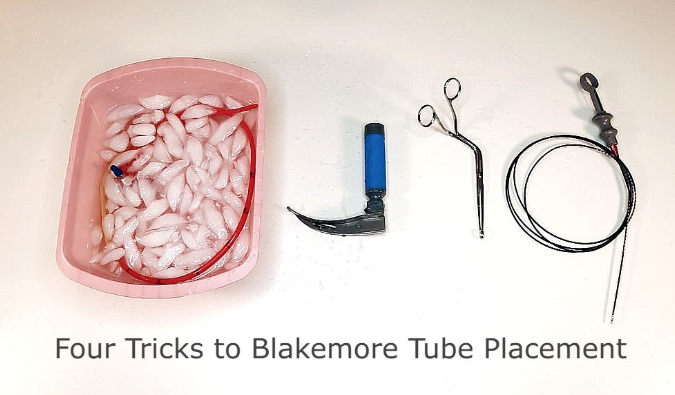
As discussed in the podcast, we have our 4 Tips and Tricks for placing a Linton, Minnesotta, or Blakemore, that is definitely worth a listen!
Subscribe to the Podcast on


Podcast subscription form
"*" indicates required fields